PD-L1 upregulation
IPI201 activates the cGAS–STING/IRF3 innate-immunity pathway, transcriptionally upregulating PD-L1. Validated in vitro and in two syngeneic in vivo models in combination with atezolizumab (Tecentriq).

Pipeline · IPI201
An intravenous synthetic small molecule designed to convert immunologically cold, PD-L1-negative tumors into checkpoint-sensitive targets, without competing with the checkpoint inhibitors already on the market.
PD-1 checkpoint inhibitors like Keytruda fail to work in the majority of solid tumors. Most patients have cold tumors with low or absent PD-L1 expression, making them ineligible for or unresponsive to checkpoint therapy.
IPI201 is designed to convert this excluded population into checkpoint-sensitive patients by upregulating PD-L1 expression, repolarizing tumor-associated macrophages, reducing inflammatory drivers of immune exclusion, and improving tissue perfusion. The result is an adjuvant strategy that creates new responder populations rather than replacing existing therapies.
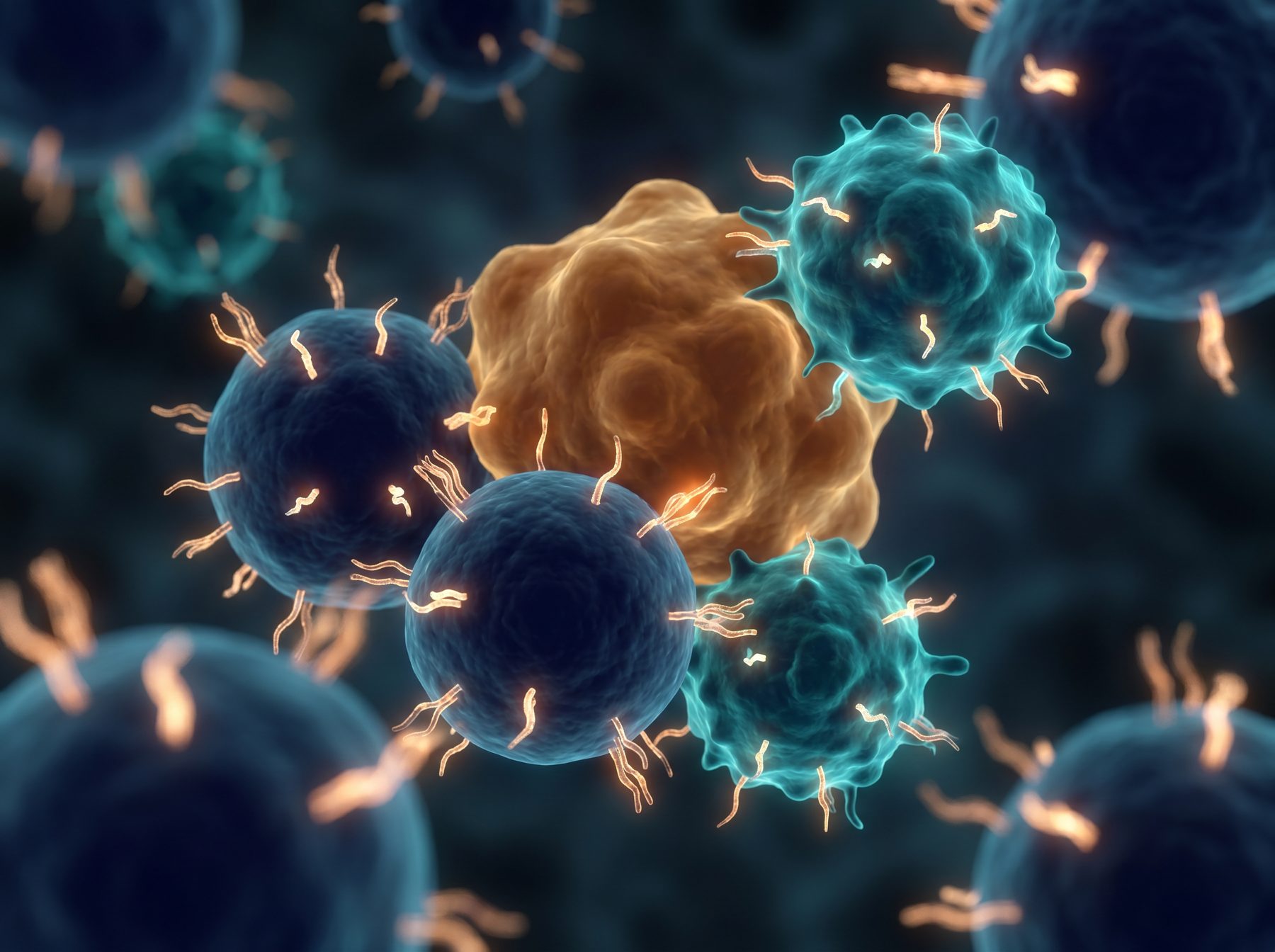
IPI201 is a multi-target small molecule. Each pathway has been validated in preclinical models. Together, they remodel the tumor microenvironment to restore the conditions under which checkpoint and cellular therapies can work.
IPI201 activates the cGAS–STING/IRF3 innate-immunity pathway, transcriptionally upregulating PD-L1. Validated in vitro and in two syngeneic in vivo models in combination with atezolizumab (Tecentriq).
Shifts tumor-associated macrophages from a pro-inflammatory M1 phenotype toward an anti-inflammatory M2 phenotype, reducing the local signals that exclude T cells from the tumor core.
Reduces TNF-α, reactive oxygen species, and broader inflammatory mediators, restoring anti-tumor immune infiltration so checkpoint therapy can take hold.
Regulates blood flow to enhance reperfusion following hypoxic injury, supporting drug delivery to the tumor and creating adjacent applications in traumatic brain injury and ischemia-related indications.
Two recent clinical readouts in PD-1 refractory triple-negative breast cancer have each demonstrated 50% objective response rates, independent confirmation that the cold-to-hot biology IPI201 targets is real and clinically actionable.
"50% objective response rate in PD-1 refractory TNBC. Directly validating that resistance is convertible in humans and the market opportunity is real."
Cromolyn study, Nature Medicine, June 202550% ORR in PD-1 refractory TNBC, directly validating that checkpoint resistance is convertible in humans through immune microenvironment modulation.
50% ORR in anti-PD-1 refractory TNBC via mast cell mobilization, confirming that checkpoint resistance is reversible with the right adjuvant mechanism.
IPI201 transcriptionally upregulates PD-L1 via cGAS–STING/IRF3, converting checkpoint-resistant TNBC tumors into atezolizumab-sensitive targets in two syngeneic in vivo models.
In a colorectal tumor mouse model, IPI201 combined with anti-PD-1 produced synergistic anti-tumor activity across every measured endpoint, outperforming PD-1 monotherapy on survival, necrosis, microenvironment remodeling, and gene-expression modulation.
"71% of all gene expression changes were exclusively attributable to the IPI201 + anti-PD-1 combination. Strong preclinical evidence that IPI201 can convert PD-1 non-responders into responders."
Internal colorectal tumor mouse model, Isosceles preclinical programIn collaboration with CytoImmune, IPI201 demonstrated a previously unrecognized (and now patented) dual role in NK cell-based immunotherapy: sensitizing colorectal cancer cells to NK killing while independently sustaining NK cell survival.
IPI201 operates through two complementary NK mechanisms: it sensitizes tumor cells to NK-mediated killing, and it independently sustains NK cell viability, addressing one of the central limitations of NK cell therapy, persistence in vivo. This positions IPI201 as a platform enhancer across both checkpoint and cellular immunotherapy modalities.
Despite transforming outcomes in select cancers, checkpoint immunotherapies still generate objective responses in only about 15–30% of patients across most solid tumor types, leaving the majority as cold, non-responders who represent a major opportunity for agents that can convert their disease into immunologically hot, immunotherapy-sensitive targets.